What makes an API marketplace trustworthy
In this category, trust is verification, refund rules, fee clarity, testing paths, and support after payment.
LimitPear
Founding Team
What makes an API marketplace trustworthy
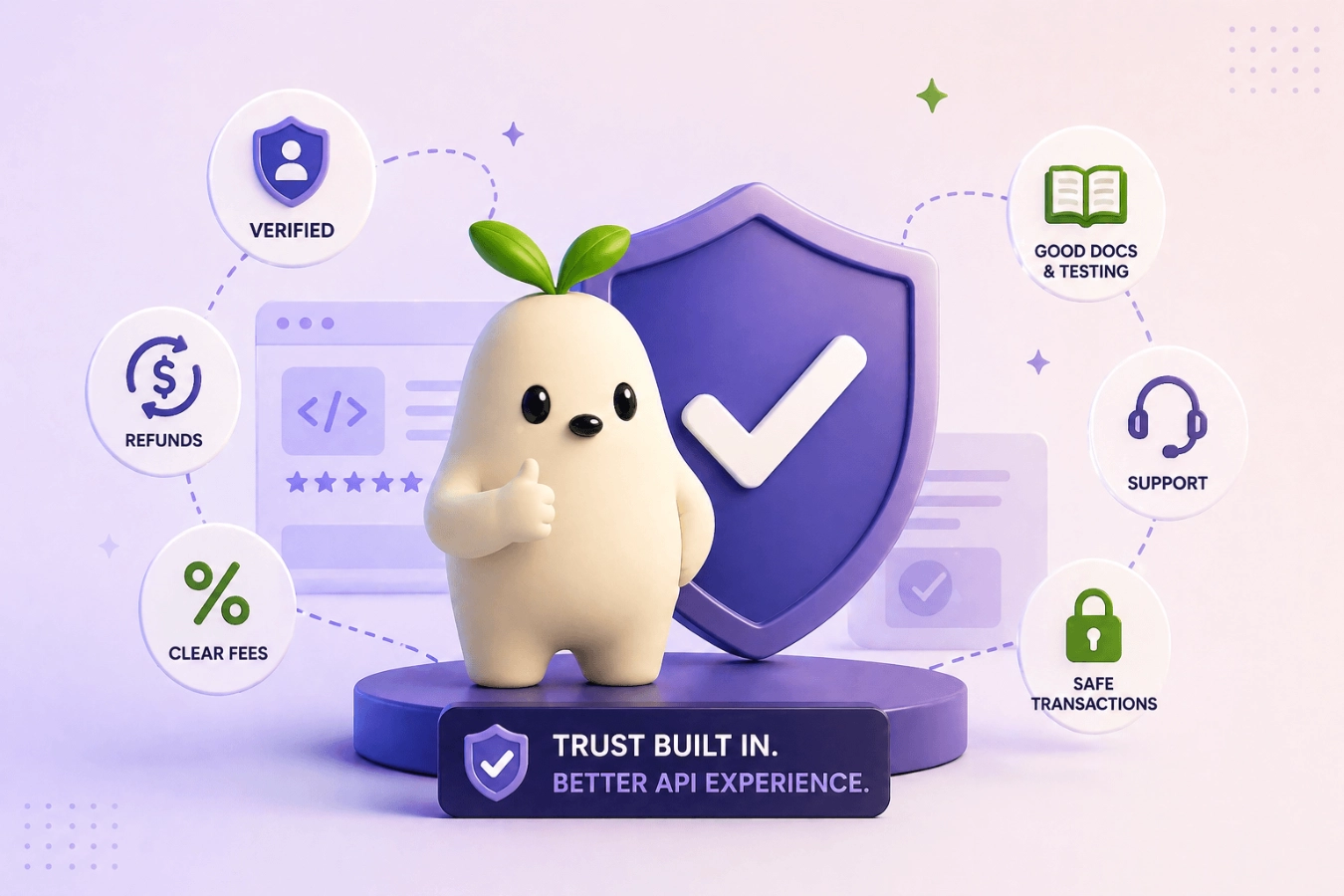
An API marketplace asks both sides for money, time, and dependency risk. If the platform cannot show what it checks before payment and what it does after payment, the buyer and the seller are carrying most of the risk themselves.
Trust in this category is not a slogan. It shows up in verification, refunds, fees, docs, and support once the transaction stops being clean.
Verification
A marketplace that verifies listings saves the buyer from doing all the first-pass screening alone. That does not prove the API is perfect, but it does remove some of the "anyone can post anything" problem.
If there is no verification step, the marketplace is mostly a shelf. The buyer is still doing the risky part before the first call.
Refunds
A refund path changes the purchase decision because the buyer can see the rule before paying. The useful question is simple: can a bad first week be reversed without turning into a private argument?
LimitPear makes that signal visible with verified listings and refund rules. The limit is that refunds do not fix a bad integration plan or a weak API. They only reduce the cost of a wrong first purchase.
Fees
Fee clarity matters to sellers too. If the platform hides the cut or makes the payout path hard to understand, the seller has to guess what margin is left after each sale.
This is one reason a smaller marketplace can still look better than a larger one. Clear commission rules make the business side easier to price before the API ever goes live.
Docs and testing
A trustworthy marketplace should make it easier to inspect the API before full commitment. Good docs, a clear test path, and enough endpoint detail lower the chance of paying for something the buyer still cannot evaluate.
That does not replace provider quality. It does tell you whether the marketplace is helping the evaluation or just hosting the page.
Support after payment
The marketplace job does not end at checkout. Billing problems, refund requests, broken access, and unclear next steps are all trust problems once money changed hands.
If the platform disappears after the sale, both sides are pushed into manual cleanup. LimitPear competes here with verified listings, refunds, and support around the transaction. RapidAPI still has the broader catalog, so some teams will accept more screening work to get that reach.
Recommendation
Choose the marketplace that shows verification, refund rules, clear fees, docs or testing paths, and support after payment before you commit to it. Use buy API online if you are on the buyer side, and check best API marketplace or sell your API if you are comparing the platform from both sides.
If the deciding factor is the biggest catalog, the larger marketplace can still win. If the deciding factor is a cleaner purchase path, the smaller marketplace can still be the safer choice.
Build with LimitPear
Turn demand into the next API opportunity
Explore the marketplace, request what is missing, and use the blog as a bridge between ideas and real developer demand.