Buy APIs online with clearer discovery and better trust signals
A buyer-facing landing page for developers searching for APIs to integrate without wasting time on weak listings and unclear marketplace signals.
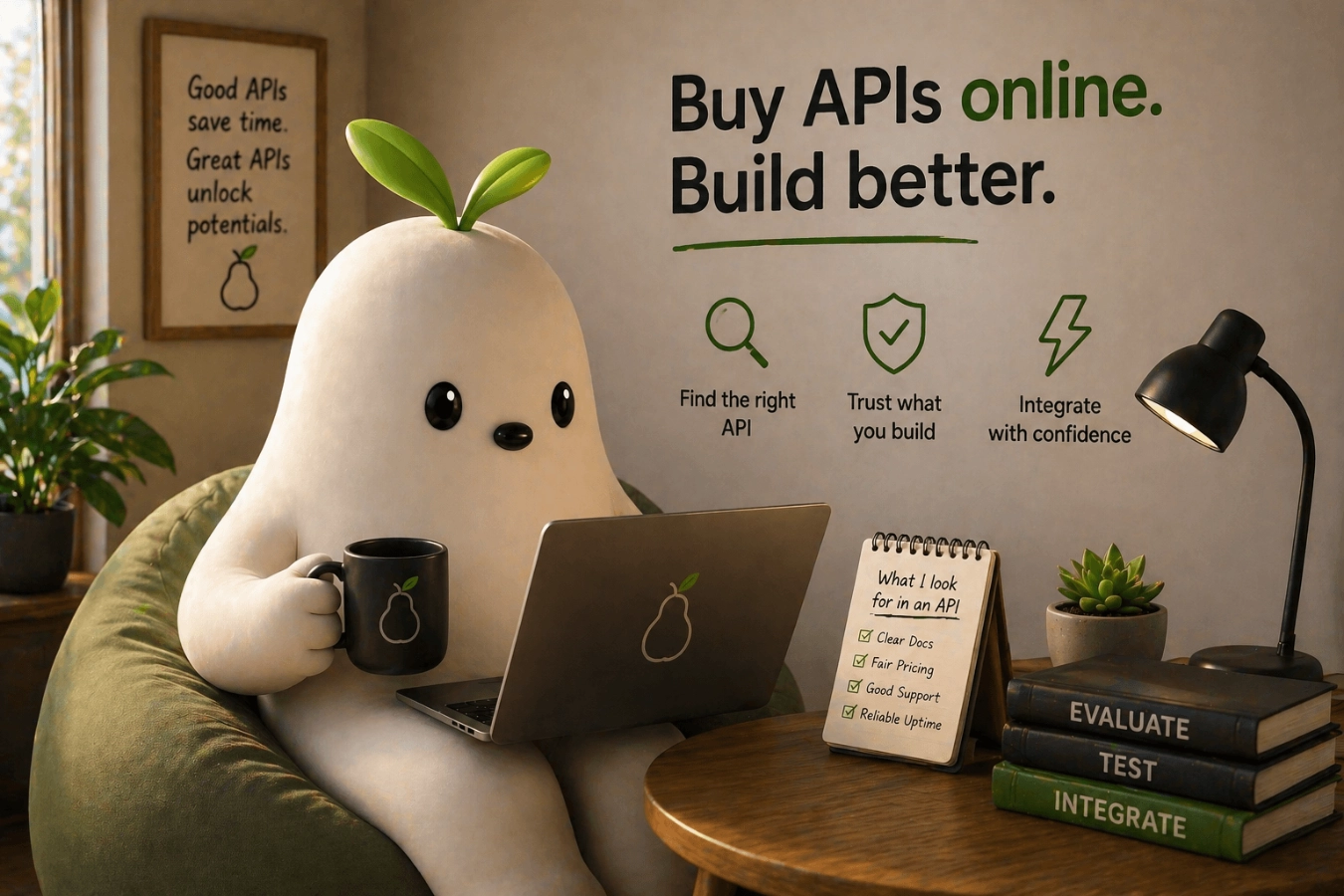
Buying an API online should be easier than it is.
Most developers are not asking for anything strange. They want to find a useful API, understand what it does, see what it costs, test it, and decide whether it is worth integrating.
But in practice, that process still feels messier than it should.
The problem is not only discovery. It is trust.
When you buy an API, you are buying more than an endpoint
You are also buying the maintenance burden around it.
If the docs are weak, you inherit that.
If pricing is vague, you inherit that too.
If the provider disappears, changes things without warning, or makes support hard to reach, that becomes your problem the moment the API sits inside your product.
That is why buying carefully matters. The best API listings are not only functional. They make evaluation feel clear.
What buyers should look for first
Before you subscribe or integrate, check a few practical things.
Can I understand what this API does quickly?
If you have to work too hard just to understand the basic use case, that is a bad start.
A good listing should tell you what problem the API solves, who it is for, and what the likely output looks like.
Is pricing clear enough to make a decision?
You do not need a perfect forecast on day one.
But you should at least understand the plan structure, what limits exist, and whether the pricing model matches how you expect to use the API.
Can I see trust signals without digging?
Clear docs help. So does a believable listing, visible structure, and enough platform context to feel like the API is not just floating there without accountability.
That matters more than people think. A polished page alone is not enough.
Good discovery saves real time
One of the biggest problems with buying APIs online is not the purchase itself.
It is the time lost before the purchase.
Bad discovery means:
- weak listings mixed with good ones
- too much time spent comparing unclear options
- more guesswork before integration
That is why a good marketplace should help you narrow the search, not just show a lot of results.
Browse by category, use case, and practical fit. That is much more useful than raw volume.
We wrote more about that in why API discovery is still harder than it should be.
A marketplace should help you evaluate, not just browse
Buying APIs online is not like buying a simple digital file.
You are making a technical dependency decision.
The marketplace should respect that.
That means helping buyers answer practical questions:
- Does this API look maintained?
- Is the provider clear about what is included?
- Can I test it before I commit deeply?
- Is the use case obvious?
- Does the listing feel trustworthy enough to move forward?
The more clearly a marketplace supports that evaluation, the better the buying experience gets.
Why buyer trust matters so much
For buyers, trust is what turns a listing into a serious option.
Without that, every purchase feels riskier than it should.
And when trust is weak, the buyer starts doing extra work just to feel safe. More manual checking. More hesitation. More time wasted.
That is one of the reasons we think marketplaces should care more about the quality of the environment, not just the number of listings.
Why LimitPear takes this approach
LimitPear is built around the idea that API discovery should feel cleaner and more believable.
We want buyers to spend less time sorting through noise and more time finding tools they can actually use.
That means putting more weight on trust, clearer discovery, and a marketplace structure that helps both sides.
It also means remembering that buyers are not only looking for "more APIs." They are looking for APIs they can evaluate with confidence.
If you are building with agents or automation-heavy workflows, that need gets even sharper. We touched on that here: if you are building an agent, you still need APIs.
Buying carefully is not the same as buying slowly
Good buyers are not cynical. They are careful.
They want enough clarity to move with confidence.
That is what a good marketplace should help with:
- clearer discovery
- stronger trust signals
- easier evaluation
- less wasted time before integration
If you want to buy APIs online without digging through weak listings and unclear signals, explore APIs.