
If you are building an agent, you still need APIs
Agents can reason and orchestrate, but they still need reliable tools underneath to actually do anything useful.
LimitPear
Founding Team
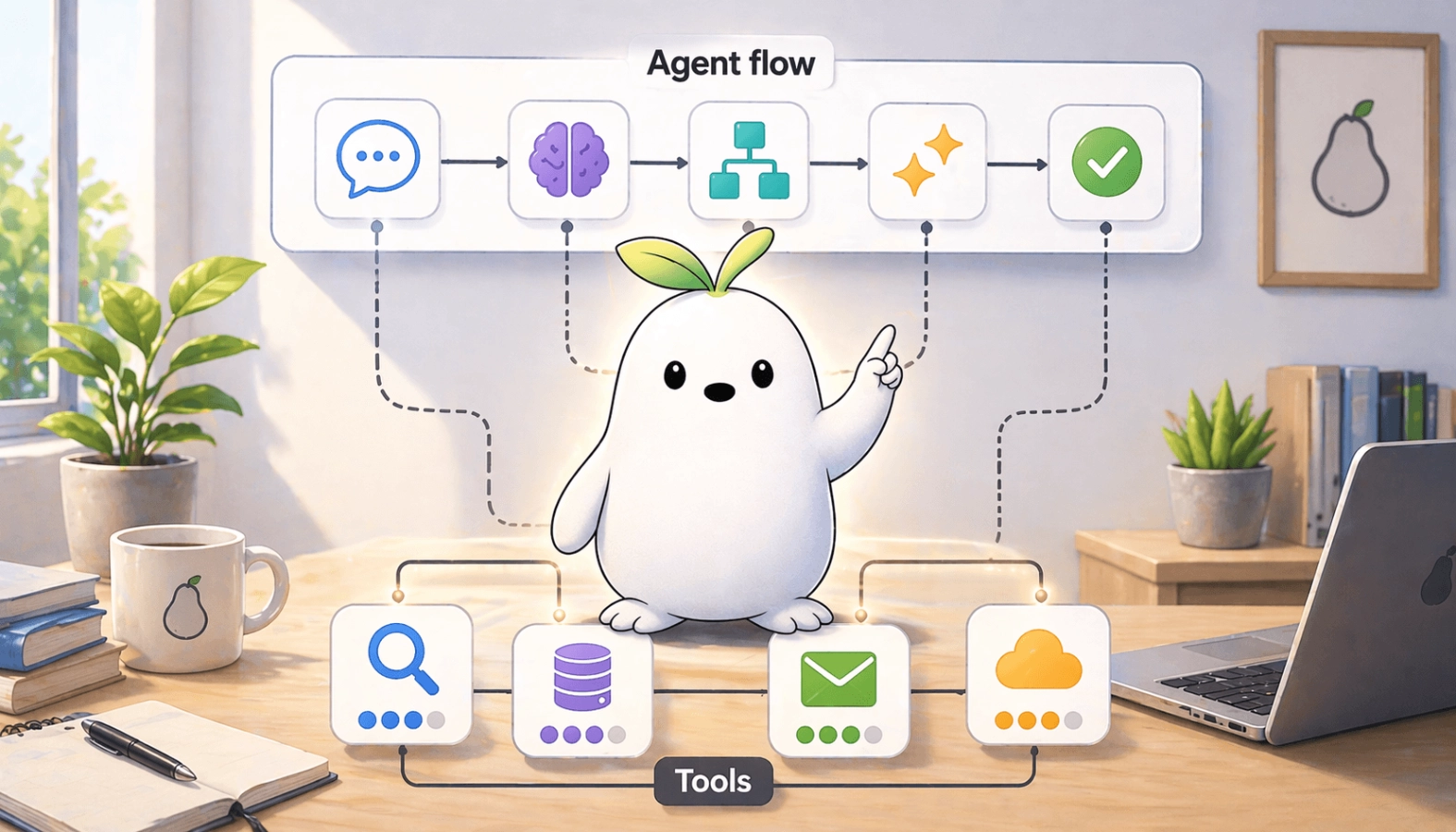
If you are building an agent, you still need APIs
There is a framing around agents that I think is already causing confusion.
People talk about them like they replace APIs.
They do not.
They change the interface. They change how the user interacts with software. They may even change how work gets delegated. But when an agent needs to actually do something useful, it still needs a tool underneath.
Most of the time, that tool is an API.
That is the part that gets skipped.
An agent can decide what to do next. It can interpret input. It can pick between options. It can chain steps. But if it needs to send an email, look up a phone number, check an invoice, verify an identity, pull a record, summarize a document, or trigger a workflow, something still has to execute that action.
That execution layer does not disappear because the interface got smarter.
Agents are not the tool
I think this is where people mix things up.
An agent is not magic. It is not the database, not the payments rail, not the OCR engine, not the CRM, not the messaging layer, and not the billing system.
It is the layer that decides how to use those things.
That distinction matters because a lot of the current conversation makes it sound like once you have an agent, the infrastructure problem is solved.
It is not solved. In some ways it gets harder.
The moment you move from a person clicking buttons to a system taking actions programmatically, the tool layer matters even more.
Because now the cost of weak infrastructure is not just a bad user experience.
It is failed execution. It is bad data. It is the wrong action happening automatically. It is an agent choosing a tool that should not have been trusted in the first place.
That is not a small issue.
APIs are still the execution layer
If an agent is going to do real work, it needs something dependable underneath.
That usually means:
- an API with a clear contract
- stable auth
- predictable responses
- decent documentation
- real uptime
- some reason to trust the provider
Without that, the agent may still look clever in a demo, but it will break the moment it has to operate in the real world.
This is why I do not buy the idea that agents make APIs less relevant.
I think they make them more relevant.
Before, a messy API might still be usable because a human could work around it. A developer could notice the odd behavior. A team could patch the integration. Someone could read the docs twice and figure out what the provider meant.
Agents are much less forgiving.
If the tool is unreliable, badly structured, or inconsistent, that weakness gets pushed directly into the system using it.
So no, the API layer does not go away. It becomes the thing your agent depends on every time it needs to leave the sandbox of text and do something real.
Where MCP fits
MCP matters. I think it is useful. It can help standardize how tools are exposed and discovered. It can make it easier for agent builders to connect systems without reinventing the same integration logic every time.
That is good.
But MCP does not replace the underlying tool.
It does not turn a bad API into a good one. It does not fix weak documentation. It does not create trust. It does not make an unreliable provider reliable.
It is a layer that helps access and orchestration.
The actual work still depends on what sits underneath.
That is why I think the conversation should be more grounded than it often is. MCP is helpful. Standardization is helpful. Better tool discovery is helpful.
But none of that changes the basic reality that an agent still needs something solid to call.
And if the underlying tool is weak, the nice wrapper on top does not save you.
Trust gets more important, not less
This matters for marketplaces too.
If we are moving toward a world where more software gets used by agents instead of people clicking through dashboards manually, then discoverability alone is not enough.
The marketplace cannot just be a pile of listings.
You need structure. You need accountability. You need enough verification that builders are not wiring important workflows into random tools they cannot trust.
That is one of the reasons we keep coming back to trust as the real product.
A catalog by itself is not the value. A long list of APIs by itself is not the value.
The value is whether a builder can find something and feel confident enough to put it into a real system.
That gets even more important with agents, because agents amplify whatever sits underneath them.
If the tool is good, that is powerful. If the tool is sloppy, the agent just helps you fail faster.
This is why the marketplace layer still matters
I think some people assume agents will make marketplaces less important because the interfaces will get abstracted away.
I think the opposite is more likely.
As agents need more tools, the problem shifts from "can I connect something" to "can I find the right thing to trust and use quickly."
That makes structured marketplaces more important, not less.
Especially if they are built with agents in mind. Especially if they care about verification. Especially if they treat APIs as infrastructure instead of just content to list.
A builder working on an agent usually does not need more hype. They need:
- something that works
- something they can understand
- something they can call predictably
- something they can trust in production
That is a much more useful standard.
Why this matters to us at LimitPear
At LimitPear, we are not looking at agents as a reason to care less about APIs.
We see the opposite.
Agents make the tool layer more visible. They make standardization more useful. They make trust more important. They make bad infrastructure harder to hide.
That is part of why we think a verified, structured marketplace matters.
Not because every builder wants another catalog. But because if agents are going to discover and use tools programmatically, the ecosystem around those tools needs to be better than what exists today.
And if you are building an agent and cannot find the API or tool you need, that should not be the end of the road.
That is why /request exists.
If the tool you need is missing, request it here.
Build with LimitPear
Turn demand into the next API opportunity
Explore the marketplace, request what is missing, and use the blog as a bridge between ideas and real developer demand.