An API marketplace for indie developers who want to ship and sell faster
A marketplace landing page designed for solo builders and small teams who want distribution and monetization without a heavy operations stack.

Indie developers usually do not need more complexity. They already have enough of that.
What they need is a way to publish something useful, put a price on it, and see if people actually want it without spending the next month rebuilding billing, plan logic, payout flow, and marketplace plumbing around it.
That is why an API marketplace for indie developers should feel lighter than the default options. It should help you ship faster, not give you a second product to maintain.
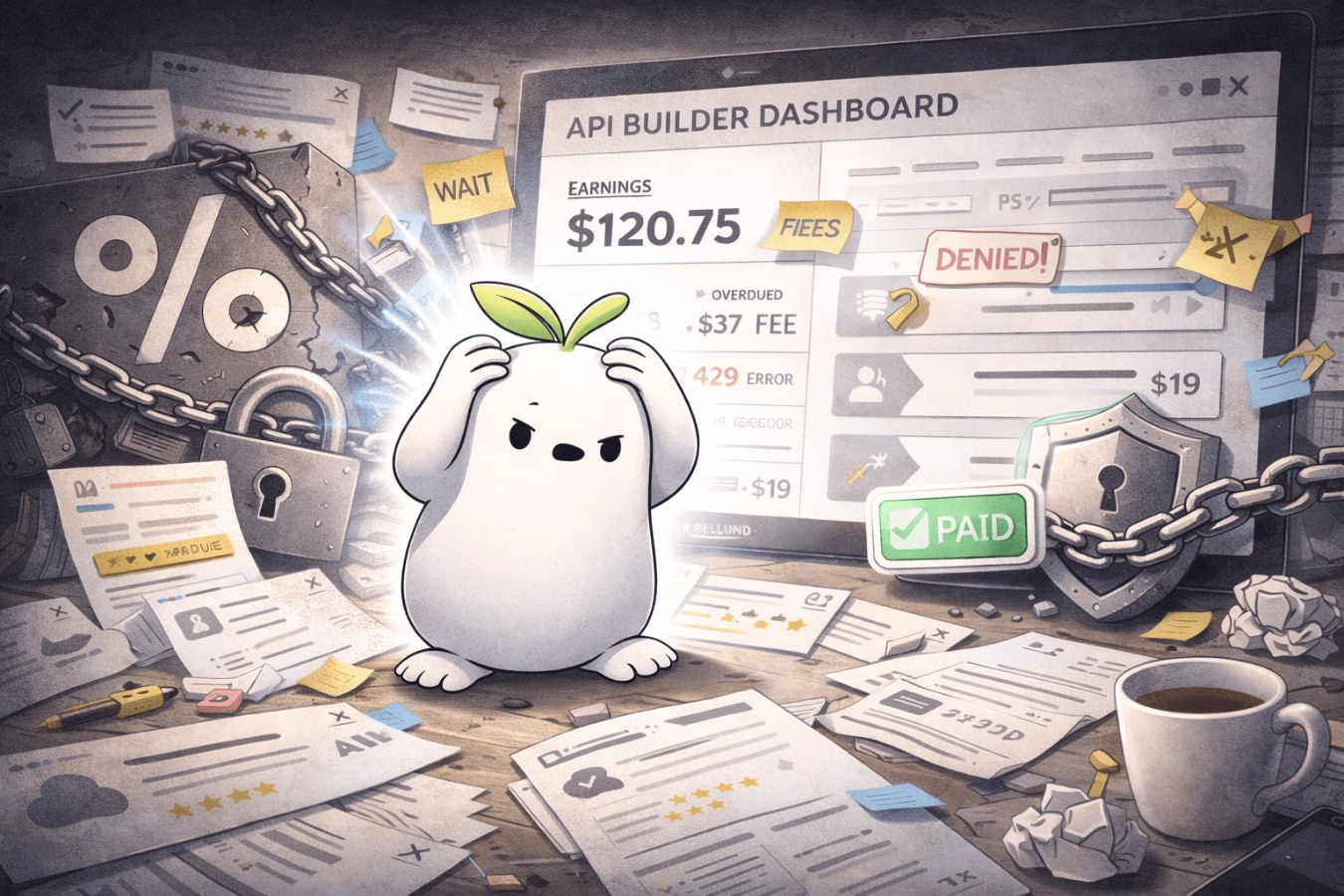
Why this matters more for small teams
If you are a solo builder or a two-person team, every extra layer has a real cost.
A confusing fee model matters more.
A slow payout process matters more.
Weak support matters more.
If discovery is poor and your API gets buried, that matters a lot more when you do not have a sales team or a paid acquisition budget behind you.
For indie developers, the marketplace is not just a listing site. It becomes part of the product around the API.
What indie developers should actually look for
The first thing is clarity.
You should be able to understand how the platform works without reading ten different help pages. What happens when someone subscribes? How do payouts work? What fees get taken? What does the buyer see? How hard is it to update plans later?
The second thing is low operational drag.
You probably built the API because it solved a real problem. You probably did not build it because you wanted to become an expert in subscription infrastructure. A good marketplace should let you stay focused on the API itself.
The third thing is trust.
This matters more than people admit. If buyers do not trust the listing, the docs, the validation process, or the platform itself, it does not matter how good your endpoint is. Trust is not a nice extra in a marketplace. It is the thing that makes the rest work.
Why bigger marketplaces often feel heavy
A bigger catalog does not always mean a better experience.
Sometimes it just means more noise, more weak listings, and more work for buyers to figure out what is real and what is not. On the seller side, it can also mean higher fees, less visibility for smaller creators, and very little support when something goes wrong.
That is one of the reasons we built LimitPear in the first place. We had the same frustration ourselves. We wanted a marketplace that felt fairer, cleaner, and easier to work with.
If you want more context on that, you can read why we built LimitPear.
The real question is not "can I list here?"
The real question is: if this API starts getting attention, is this still a platform I want to grow on?
That means asking a few practical questions:
- Is the fee model simple enough that I can explain it in one minute?
- Can I publish without setting up a whole business stack around the API first?
- Does the platform make the listing feel trustworthy to buyers?
- Do I have a realistic shot at being discovered if I am not already a known company?
- Will this still feel manageable when I need to update pricing, docs, or plans?
Those are the questions that matter more for indie developers than generic feature lists.
A marketplace should make small teams feel faster
Good infrastructure should make you feel lighter.
You should feel like the platform removed work from your plate, not added more. That is especially true for smaller teams, because smaller teams do not have time to hide bad platform decisions behind process.
If you are selling an API on nights and weekends, or trying to turn a useful internal tool into a real product, speed and clarity matter a lot.
That is also why we keep coming back to the same point: monetization is rarely blocked by the endpoint itself. It usually gets blocked by all the surrounding work.
We wrote more about that here: how to publish and monetize your API without building the whole business stack.
Why LimitPear fits this better
LimitPear is built around a simple idea: the marketplace should help you publish and monetize your API without making the process heavier than it needs to be.
That means:
- a clearer path from useful API to public listing
- lower friction for small teams
- more emphasis on trust and verification
- a fee model that is easier to understand
- a marketplace that does not treat small creators like background noise
We are not pretending every seller has the same needs. But for indie developers, speed, clarity, and trust usually matter more than a giant catalog and a complicated platform story.
If you want to ship and sell faster
Then the best marketplace is usually the one that lets you stay close to your product.
You should spend your time improving the API, answering real feedback, and making the offer better.
Not rebuilding the whole selling layer from scratch.
If that is what you are looking for, list your API free.